- 1The rule
- 2How you find out
- 3The grey area
- 4What Sydney Water won’t do
- 5Sydney Water blocked sewer responsibility: the boundary rule
- 6What to do when the sewer blocks
- 7Claiming your plumbing costs back from Sydney Water
- 8Council, strata and shared pipes
- 9Keeping your side of the boundary clear
- 10Quick answers
The rule
You own and maintain the sewer from your house to the point where it connects to Sydney Water’s main, which is usually at or near your property boundary. Sydney Water owns the main and the connection point. The same applies to stormwater in the street. Anything on your side is yours to fix; anything on theirs, they fix at no charge.
How you find out
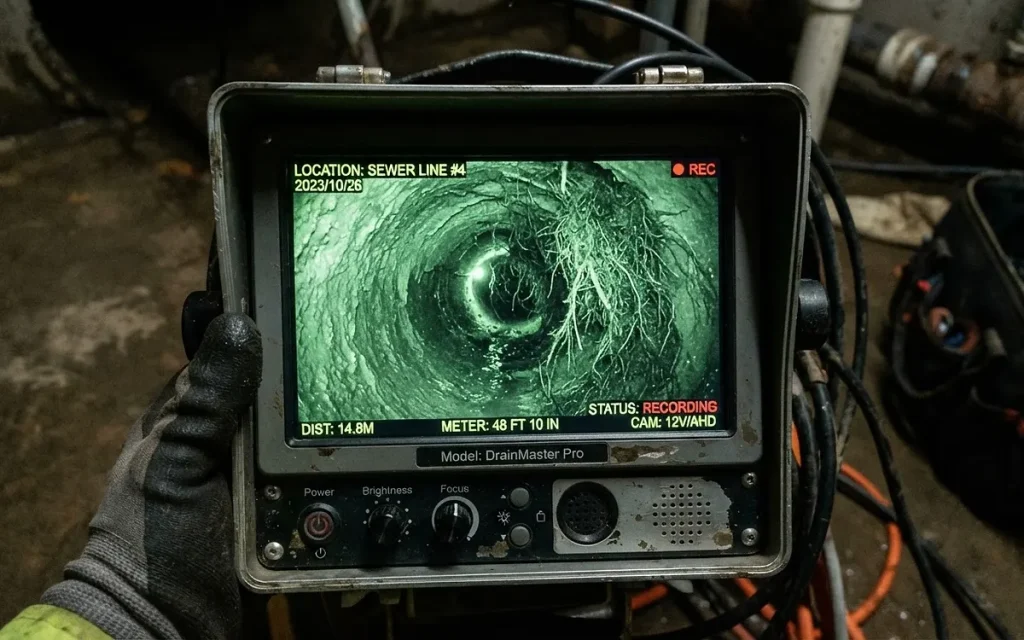
The camera. We run it from the overflow gully or an inspection shaft down the line, and the locator tells us how far along and how deep the blockage is. If it’s past the boundary, we stop and tell you to call Sydney Water on 13 20 90. We don’t charge you to clear a public main.
The grey area
The boundary trap, where a house sewer drops into the main, is an old design that catches everything. Responsibility there depends on where exactly the fault sits, and the footage settles it. If you’re told by anyone that the blockage is ‘probably’ Sydney Water’s without a camera, ask them how they know.
What Sydney Water won’t do
They won’t clear your side, they won’t camera your line, and they won’t repair a cracked pipe under your driveway. Their responsibility ends at the connection. The good news is that most residential blockages are on the private side and can be cleared the same day.

Want to see what’s actually going on?
A plumber answers the phone, 7 days · 6am–10pm. Or book a camera down the line and see the problem for yourself before anyone quotes.
Sydney Water blocked sewer responsibility: the boundary rule
Sydney Water’s wastewater system is split at the property boundary. Everything on your side is the owner’s responsibility: the private pipes from every toilet, sink and floor drain out to the connection point, the fittings, the overflow relief gully, and any digging needed to repair them.
Everything on the other side, the Sydney Water pipes in the street, the mains and the maintenance holes on public land, is Sydney Water’s. The connection point is usually within a metre inside the boundary, and the sewerage service diagram for your property, which Sydney Water can supply, shows exactly where the private service ends and the network begins.
Signs it is your private pipe
Only your property is affected. The neighbours’ toilets flush normally, there is no water in the street, and the problem started with one fixture and spread.
Tree roots in private lines, wipes, fats, oils and grease that harden in the pipe, and damaged pipes from age are typically the property owner’s problem, and a licensed plumber is who you contact. Toilets and sinks blocked inside the house are always the owner’s.
Signs it is Sydney Water’s pipe
Other properties are affected too, or the overflow relief gully runs when nobody in your house is using water, or there is a continuous overflow from a maintenance hole located in the street or on public land, or wastewater surfaces on your property during widespread flooding in your local area. Those point to a blockage, a broken main or a surcharge in the network, and Sydney Water will clear the blockage as a free service to residential customers. It is the same split as the water supply: the meter is the boundary for water, the connection point is the boundary for wastewater.
What to do when the sewer blocks
The immediate steps are the same whichever side the blockage is on.
- Stop using water: no flushing, showers, washing machine or dishwasher. Every litre is going into a blocked line.
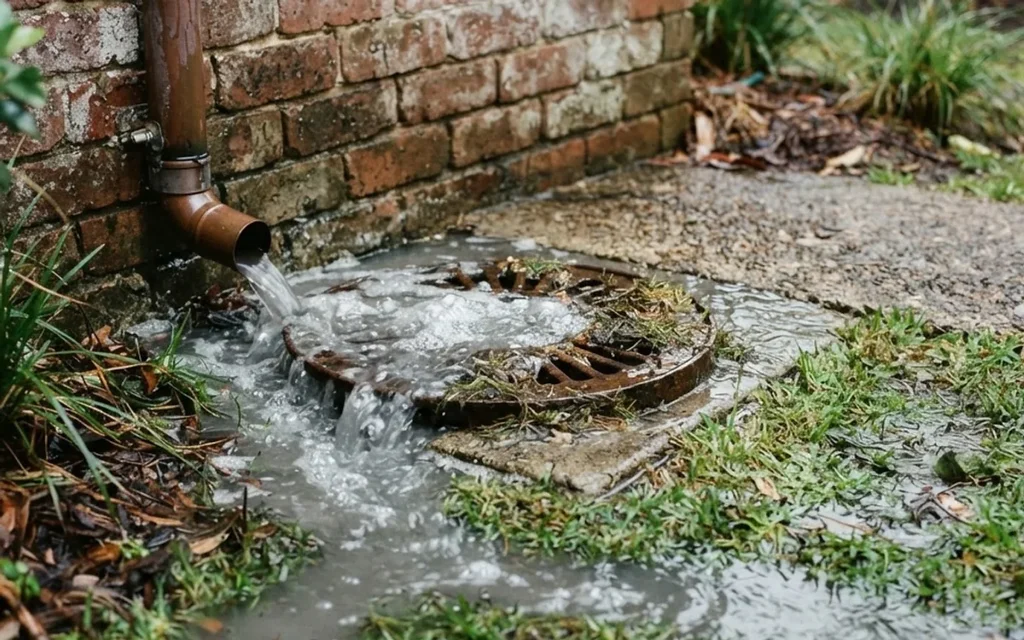
- Look outside. If the gully or a maintenance hole is overflowing, note where the water on your property is coming from, keep people and pets away from the sewage, and leave the clean up until the line is clear.
- Ask a neighbour whether their drains are working. If several houses are affected, report it to Sydney Water on 13 20 90 before paying anyone.
- If only your property is affected, contact a licensed plumber. Only a licensed plumber can carry out work on private wastewater pipes, and Sydney Water will not investigate the private side.
- If the plumber cameras the line to the boundary and finds it clear, that is the equipment that determines which side the problem is on: the blockage is in the network. The plumber reports it to Sydney Water with the job number and you should not be charged for a repair.
Claiming your plumbing costs back from Sydney Water
If you paid a plumber to clear a blockage that turned out to be in Sydney Water’s pipes, you can claim the reasonable cost back. The claim needs four things: a description of the work done, the invoice, the plumber’s report showing your private pipes were clear and the blockage was in the network, and any excavation details or footage.
Have the supporting documentation ready when you submit, and expect the claim to take up to eight weeks to process. Sydney Water clears around 20,000 wastewater blockages a year across the network and spends tens of millions doing it, which is why it takes the split seriously: it pays for its side, and it expects owners to maintain theirs.
Council, strata and shared pipes
Two other parties can own the pipe. Stormwater is not Sydney Water at all; the local council owns the public stormwater drains, and a blocked stormwater pipe on your property is yours.
In a strata building, pipes serving more than one lot are common property, and the owners corporation, not the lot owner, is responsible for wastewater blockages in them. And on some older blocks a shared private sewer runs through several properties before it reaches the network; the owners it serves share the cost, and the sewerage service diagram is how you find out whether yours is one of them.

Keeping your side of the boundary clear
Most private-side blockages are avoidable. Only pee, poo and toilet paper go down the toilet; non-flushable wipes build fatbergs in private pipes just as they do in the mains.
Keep fats, oils and grease out of the sink. Avoid planting trees with aggressive root systems within six metres of the wastewater pipes, and if the sewer is old clay under existing trees, a regular maintenance plan of a jet clean and camera check every couple of years catches roots and a collapsed pipe early, which is far cheaper than emergency repairs and stops the same problem coming back every winter. The same drainage inspections tell you where the connection point is, so the next time drainage issues appear you already know which side of the line the problem is on and who to call to get the problem fixed.
Quick answers
The three questions we get asked most on the phone.
Does Sydney Water clear blocked drains for free?
Only blockages in its own network. It does not attend private pipes, even for pensioners or emergencies.
Who owns the pipe under the footpath?
Usually Sydney Water, from the connection point outwards. The sewerage service diagram confirms it for your property.
Can I claim if I did not use a licensed plumber?
No. The claim relies on a licensed plumber’s report showing the private side was clear.