Stormwater Drains Sydney
Stormwater drain blocked? Find the problem and get water moving again.
or
Free CCTV inspection
Book a stormwater drains plumber
Tell us what’s happening. We’ll call you back to lock in a time.
★ No call-out fee
★ 7 days · 6am–10pm
★ Footage yours to keep
Quick answer
Clearing a blocked stormwater drain in Sydney typically costs $400–$750, including high-pressure jetting from the pit or downpipe towards the kerb, followed by a CCTV inspection. There’s no call-out fee, and the same pricing applies on weekends.
When rainwater has nowhere to go, the problem can quickly move from a puddle in the yard to water around the house, overflowing pits and damage to gardens, paths or driveways. The obstruction may be further underground in the stormwater pipes or at a damaged section of the line.
Depending on the problem, we use high-pressure water jetting, mechanical clearing and a CCTV drain camera.
Clear the blockage before the next downpour
Find where the stormwater line is restricted
Know what needs fixing before you spend on repairs
Signs you’ve got this problem
There are several signs that your drainage system is struggling before a major storm exposes the problem. Look for:
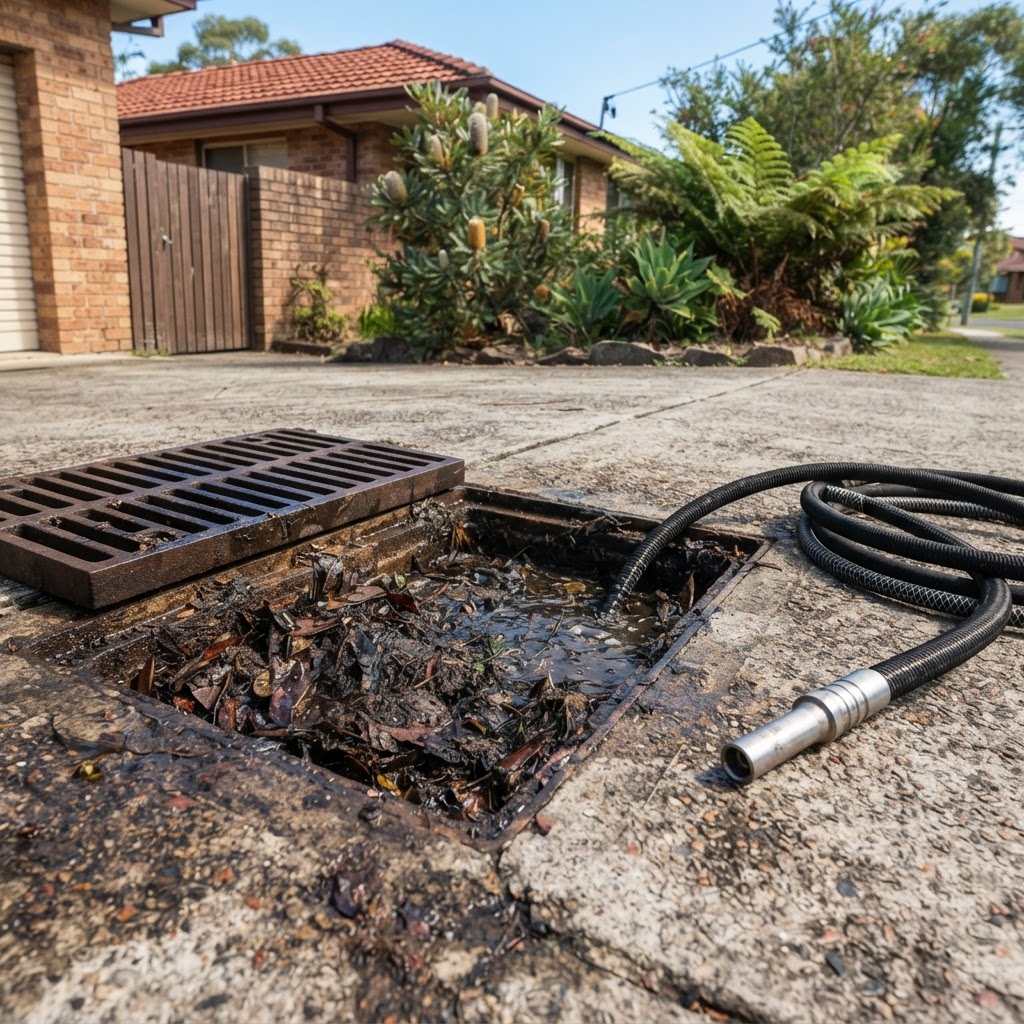
Water sitting around a stormwater grate after a relatively small amount of rain
Water pooling in the yard, driveway or along a path after rainfall
Water backing up in a downpipe grate while other drains work perfectly
Surface drain with leaves and mud
Wet and muddy patches and puddles
Stormwater problems that keep returning after the line has been cleared
Not sure? Call and describe it.
A plumber answers, 7 days · 6am–10pm. Two minutes on the phone usually narrows it down.
How we sort it
Stormwater drainage can be difficult to diagnose from the surface. We work through the problem in four stages.
Step 1
We clear the line
A high-pressure water jetter directs controlled high-pressure water through the line, helping break up and flush out accumulated sediment, leaves and other debris.
Step 2
We inspect where needed
If the line keeps blocking or there is reason to suspect a damaged section, a CCTV drain camera can be used to inspect the weak spots of the earthenware or PVC pipes.
Stormwater drains are a separate system, and they block differently
Your home has two separate drainage systems. The sewer carries wastewater from toilets, sinks, showers and the laundry. Stormwater drainage handles rain from the roof through gutters and downpipes, along with runoff from yards, driveways and paved areas through surface grates and stormwater pits. From there, the water usually flows towards the street kerb or a council stormwater system, while some properties use an absorption trench. Stormwater and sewer systems should remain separate, but the stormwater side is easy to overlook because problems often only become obvious when it rains.
Stormwater pipes carry leaves, silt, soil and garden debris rather than household wastewater. Leaves and twigs can enter through downpipes, while soil and sand wash in from gardens, paving and driveways. This material can settle where the pipe is flat, has a vulnerable point or changes direction, gradually reducing the flow. Tree roots can also enter through cracks or joints. Older Sydney properties may have clay or earthenware stormwater pipes that have deteriorated over time, while damaged, collapsed or crushed sections can create further obstructions, particularly beneath driveways or other areas carrying heavy loads.
Leaves and silt at the grate are the easy part. The pipe behind it is where stormwater jobs are won or lost.
Signs of stormwater blockage
Not every stormwater problem looks like a complete blockage. In some cases, the system continues working but has significantly reduced capacity.
Common warning signs include:
Water backing up in homes or sideways after rain
Downpipes backing up because the underground pipe is overloaded
Debris in pits after rainfall
Stagnant water around drainage points and soggy green patches
Musty odour from yard drains
Overflow in subfloor drain and around the property occurring even during moderate rainfall, leading to long-term structural damage
Who is responsible: The council or Sydney Water or you
Stormwater responsibility can depend on where the pipe is located, what it connects to and whether it forms part of a public network.
Private drainage infrastructure on a property may be the responsibility of the property owner, while public stormwater drains and wider drainage infrastructure such as pits, underground pipes or outlets may fall under the authority of the local council.
In Sydney, Sydney Water and local councils can have different responsibilities depending on the type and location of the drainage infrastructure. Do not assume every drain outside your property belongs to the same system. However, in some areas of Sydney, the stormwater trunk system is the responsibility of Sydney Water.
If your yard is overflowing along with the street drains, the council system has to address it. But if there is water backing up only in your yard, it is your responsibility. If there is uncertainty, we can explain what we can see from the inspection and what may need to be referred to the relevant authority.

How We Clear Blocked Stormwater Drains
Stormwater blockages can be caused by leaves, sediment, soil, roots and other material. Simply pushing a blockage further along the pipe may not solve the underlying problem. Our unblocking process focuses on restoring usable flow while checking what caused the restriction.
We focus on the nearest access point of the downpipe and use high-pressure water jetting to break up accumulated material and wash it through the pipe. This is more effective than eels. Where roots are involved, suitable cutting equipment can help remove the intrusion. This is followed by a complete cleaning of the pipe. The goal is to get the drains flowing properly to the kerb and establish whether there is a reason the blockage is likely to return.
Where mechanical clearing is more suitable for the obstruction, that equipment can be used instead of relying on jetting alone.
The final step is a CCTV inspection, which helps us understand if there is structural damage or cracks which caused the blockage. We identify the spot with a locator and provide you with a short report of our findings. This can help you decide whether you want long-term repairs for stormwater blockage.
What a Blocked Stormwater Drain Costs
A typical blocked stormwater drain clearing costs $400–$750, including jetting from the pit or downpipe towards the kerb and a camera inspection.
There is no call-out fee for our service areas, and the same pricing applies on weekends. The final work required can vary depending on access, the location of the restriction and the condition of the pipe. If the inspection identifies structural damage, pipe relining or targeted replacement may need to be considered separately. Reinstalling a short section of the pipe is around $1,500 to $5,000. A short, accessible line may sit toward the lower end of the range, while longer runs, roots, or difficult access may require more work. We will offer the final quotes after inspection.
Cost of clearing a stormwater blockage
$400–$750
to clear a stormwater line
The cost of clearing a stormwater blockage is usually between $400 and $750. This includes clearing and inspection. If a particular section of the pipe is beyond repair and needs replacing, the cost is between $800–$2,500. The final quote is available after inspection.
No call-out fee within Sydney
Same price nights and weekends
Footage and report yours to keep
Stormwater Drain Cleaning, Inspection and Repair Services
Whether you are dealing with water pooling after heavy rain or preparing your property for the next storm, our stormwater drainage solutions cover the full process. A licensed Sydney plumber follows these steps.
Stormwater drain cleaning
We clear blocked stormwater drains using high-pressure water jetting, which removes built-up sediment, garden waste, roots and other debris rather than simply creating a narrow passage through the blockage. Stubborn and persistent blockages can be cleared the same way, with the equipment adjusted to suit the pipe and material involved.
CCTV drain inspections
After the line is clear, CCTV drain inspections can show what is happening inside the stormwater pipes. The camera can identify tree root intrusion, damaged pipes, low points holding stagnant water and other causes of recurring problems. It also helps us detect if faulty connections are allowing the stormwater to flow into the sewer line. If a drain blockage keeps returning, the footage helps establish whether the issue is a blockage that needs clearing or a pipe that needs repair.
Pipe relining and repairs
If the inspection finds cracked or damaged stormwater pipes that are still structurally suitable for relining, pipe relining may allow the section to be repaired without excavating the entire route. Where a pipe has collapsed, been crushed or cannot be relined, targeted excavation and replacement may be required. Recommendations are based on the CCTV footage, so you know what is causing the problem before approving repair work.
Preventative maintenance
For properties surrounded by mature trees or connected to ageing clay stormwater systems, proactive maintenance can help reduce the risk of recurring blockages. Where a property has a history of recurring problems, periodic jet cleaning and CCTV inspection can help identify developing issues before they become larger drainage problems.
Stormwater Maintenance Checklist
Regular maintenance can reduce the amount of material entering the drainage network. The first step would be keeping an eye on early signs of reduced flow at the pit, musty smell from drains, water backing up in the same area due to debris, and gurgling sounds from downpipes.
Simple maintenance measures include cleaning gutters and downpipes regularly as the rainwater from the roof makes its way to underground pipes. Remove leaves and debris from stormwater pits. Make it a point to keep stormwater grates clear to keep the build-up of slits at bay. If you are noticing slope drainage in grates, you can try washing out the blockage with a hose. Check for water pooling after rainfall and consider gutter guards where appropriate. Arrange an inspection if the same blockage keeps returning and if the water doesn’t exit at the kerb.
Good preventative maintenance does not guarantee that a blockage will never occur, but it can save you from expensive repairs.

How Sydney’s Stormwater System Fits Together?
Rain falls on the roof, runs through the gutters and downpipes, and enters the underground stormwater system. Water from lawns, driveways and paved areas enters through surface grates and stormwater pits. From there, it usually travels through a stormwater line towards the kerb and gutter, then into the council drainage network and, eventually, local waterways. Some properties in areas such as Northern Beaches use an absorption trench or rubble pit, where the surrounding soil absorbs the water.
Unlike household wastewater, stormwater generally goes into the environment without treatment. That means leaves, silt, fertiliser, soil and other material washed into the system can eventually reach local waterways. When a stormwater drain is blocked, the problem is therefore not just flooding, overflowing water can also carry this material across your property and towards the surrounding drainage network.
Absorption trenches and rubble pits
If your property has no kerb connection and sends stormwater to an absorption trench, the trench itself can eventually stop working properly. Over time, silt can build up, the surrounding soil can become compacted, and tree roots can fill the gravel, reducing how much water the ground can absorb.
The signs can look much like a blocked stormwater pipe: downpipes backing up, slow drainage and water pooling in the yard during heavy rain. Jetting the line can clear the pipe leading to the trench, but if the trench itself has become heavily silted, it may need to be excavated and re-laid with fresh aggregate. That is a separate job, and the scope can be assessed from what we find at the trench inlet during inspection.
Not sure? Call and describe it.
A plumber answers, 7 days · 6am–10pm. Two minutes on the phone usually narrows it down.
Stormwater and Your Neighbours
Stormwater does not always follow property boundaries. Rainwater can move from roofs, driveways and other surfaces into drainage systems that eventually connect with neighbouring properties, streets or wider infrastructure.
If your property repeatedly experiences flooding while surrounding properties do not, the cause may be within your private drainage infrastructure. Conversely, a restriction further downstream can affect multiple properties. If several properties have a shared stormline, the responsibility might be on the owner who is using it. A proper inspection can help locate the restriction and establish whether it is within the accessible private system or further along the network.
Stormwater in a storm: what to do on the day
If there is water backing up in downpipes, the first step is disconnecting it from the underground pipes. To prevent it from entering your home, use flexible pipes to direct it towards the lawn.
Clear the grate and make sure there are no leaves, dirt or silt causing the blockage.
If there is a problem with the street manhole, get in touch with the council and let them handle.
You can use a rolled towl or sandbag at the doorway to make sure water doesn’t enter the house.
Keep photographs to claim your insurance.
Practical Actions Homeowners Can Take
There are practical preventative measures that can help protect your drainage system before the storm season arrives.
Make sure you clean gutters twice a year. Leaves and roof debris can travel into downpipes and eventually reach underground pipes.
Maintain pits and grates. Remove accumulated leaves, dirt and garden waste before they are washed deeper into the system.
Avoid planting trees too close to underground drainage infrastructure where roots may eventually reach the pipes.
Try using gutter guards and downpipe leaf diverters to stop accumulation of debris.
Keep drainage points accessible. Do not cover pits or grates with soil, landscaping or other materials that restrict access and water flow.
If your home has a drainage system with earthenware pipes, hydrojetting and camera inspection can help you find weak spots
Specialised Solutions for Older Sydney Properties
Some older Sydney properties may have earthenware stormwater pipes exposed to root growth, while others have older PVC systems that can be affected by external pressure or ground movement. Trees planted many years ago can also have mature root systems extending through the surrounding soil.
A CCTV inspection can help establish whether the existing pipe is still serviceable, whether there is a specific section causing repeated problems, or whether you need lasting repairs.
Common questions
Other drain services
Drain Cleaning
$350–$650 / hour
Slow, gurgling or smelly drains cleaned back to the pipe wall, not just poked through.
Blocked Toilet
$250–$450
Cleared fast, with the cause checked — so it doesn’t happen again on a Sunday night.
Blocked Sewer
$450–$850
When the whole line is struggling — cleared, camera-checked, and fixed for good.
7 days, 6am – 10pm
Book a CCTV inspection
This books a camera check — not a quote. We’ll see the problem, show you the footage, and talk you through the options.
Booking Request Received!
Thank you! Our plumbing team will contact you shortly to confirm your booking.
What should this cost?
Ranges are Sydney market bands for clearing and inspecting a drain, not a quote. Repairs are always a separate range you approve first.
Book a CCTV inspection
Do not wait for the next major downpour to find out whether your drainage system can cope.
If you have recurring water pooling, overflowing pits or a blocked stormwater line, we can clear the restriction, inspect the pipe and explain what the camera shows. Get the blockage identified before it turns into costly repairs or repeated flooding. Call now or request a CCTV inspection for stormwater drain service in Sydney.