- 1How roots get in
- 2What you’ll notice
- 3Step one: clear it
- 4Step two: camera it
- 5Step three: fix the entry point
- 6A note on the tree
- 7Why tree roots end up in sewer pipes
- 8Which pipes are vulnerable
- 9The trees that do the damage
- 10Warning signs of roots in a sewer
- 11How to remove tree roots from a sewer
- 12How to stop tree roots for good
- 13Preventing tree root problems in the first place
- 14What it costs
How roots get in
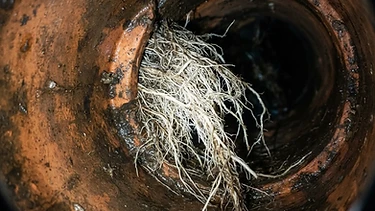
Tree roots don’t ‘break’ pipes — they find existing openings. In clay sewers that’s the joints; in PVC it’s a failed rubber ring or a crack. Roots are drawn to the moisture and nutrients inside a sewer, and once a fine root hair finds a gap, it grows into a mass.
What you’ll notice
Slow drains, gurgling, a sewage smell, and a lush green strip across the lawn following the sewer line. The blockage often comes and go with the seasons — worse in dry weather when roots grow fastest looking for water.
Step one: clear it
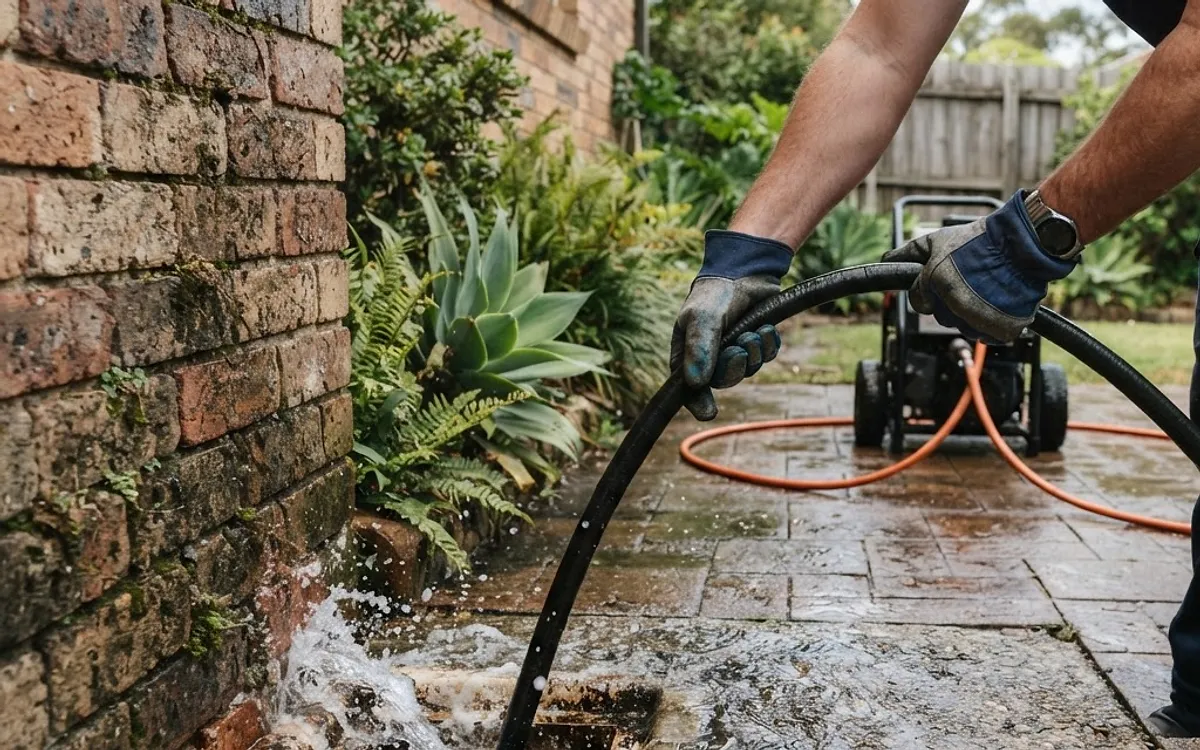
Get the line flowing again. Water jetting is better than an eel for roots because it cuts the mass out and flushes it, rather than just punching a hole. But this is a holding measure, not a fix.
Step two: camera it
A CCTV inspection shows exactly where the roots are getting in, how many entry points there are, and whether the pipe is otherwise sound. This is the step that decides everything that follows.

Want to see what’s actually going on?
A plumber answers the phone, 7 days · 6am–10pm. Or book a camera down the line and see the problem for yourself before anyone quotes.
Step three: fix the entry point
If the pipe is sound apart from the root entry, relining seals those joints permanently — roots can’t get back in. If the pipe is collapsed or badly sagged, a targeted replacement of that section is the answer. Either way, you’re fixing the cause, not the symptom.
A note on the tree
Removing the tree rarely solves it — the roots already inside keep growing. The fix is in the pipe, not the garden. We’ll never tell you to cut down a healthy tree unless the footage shows it’s the only option.
Why tree roots end up in sewer pipes
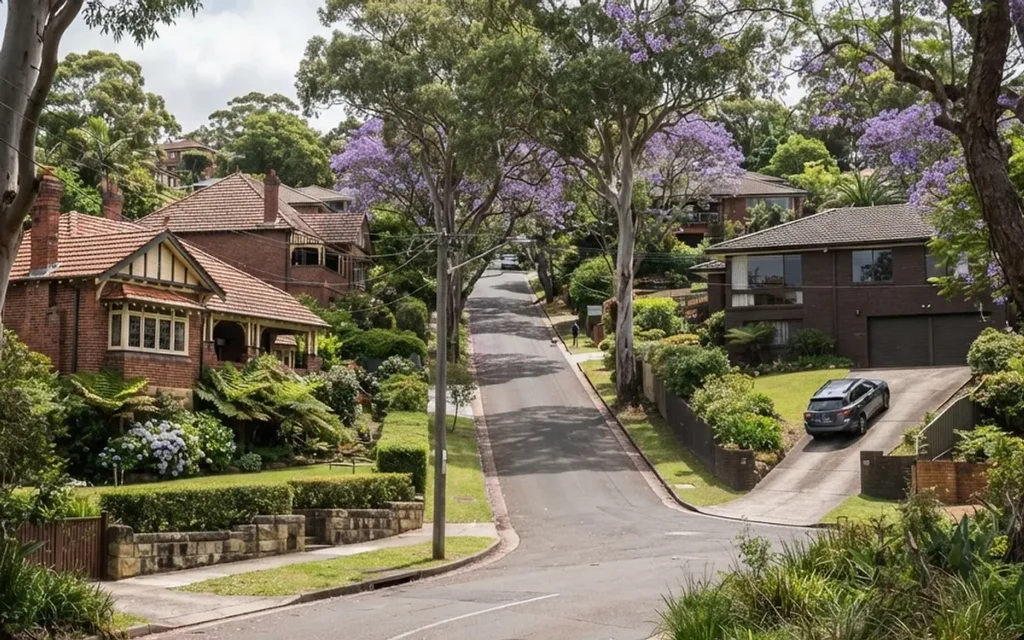
Tree roots in sewer pipe joints are the single most common thing our cameras find under older Sydney homes. A sewer pipe is the best thing a tree can find underground: a steady supply of water, warmth and nutrients, in soil that is otherwise dry for half the year. A root system does not seek out pipes deliberately, but tiny roots grow towards moisture, and a sewer line that leaks even a little at a joint draws them in from metres away.
Once a root finds the pipe it follows the moisture to the source, which is a joint or a crack. Roots penetrate small cracks that you could not fit a credit card into; a hairline fracture is enough. Inside the pipe the root has everything it needs and it grows fast, from a few hairs catching toilet paper to a root mass that fills the entire pipe. Roots can cause blockages within 6 to 12 months of getting in, and the surrounding soil around a leaking joint stays wet, which draws more roots to the same spot.
That is why tree root invasion is the number one cause of blocked drains in Sydney’s older suburbs, and why root blockages come back after a clear unless the entry point is sealed.
Which pipes are vulnerable
Clay and terracotta
Most homes built before the 1970s have clay pipes, also called terracotta or ceramic pipes, laid in short lengths with a joint every metre or so. The joints were sealed with mortar or a rubber ring, and after fifty years the mortar has crumbled, the ground has moved and the joints have opened.
Every one of those joints is a door for roots, and homes built before the 1970s often have sewer systems that are vulnerable at every one of them. Cracked pipes, even a tiny crack, do the same. Terracotta also cracks under load, so an old pipe under a driveway usually has small cracks as well as open joints.
Cast iron and galvanised
Less common in Sydney sewers but found in older inner-city homes and in the pipes under the house. Cast iron rusts from the inside and roots enter where the wall has corroded through.
PVC
PVC pipes, used since the 1970s and standard from the 1980s, have solvent-welded joints and no mortar, and PVC pipes are far more resistant to tree roots than older materials; roots rarely get into a sound PVC line. They can still enter where a PVC pipe was joined badly to an old clay section, or where a pipe has been crushed. Aging pipes of any material become vulnerable; a new pipe of any material is not.
The trees that do the damage
Any tree with hungry roots will find a leaking sewer, but some species are far worse than others. In Sydney the worst are figs, especially the Port Jackson and Moreton Bay figs on the North Shore and in the Inner West. Then liquidambars, planted everywhere in the 1960s and 70s. Willows and poplars near creeks. Jacarandas, camphor laurels, and most large gums.
Established trees are the problem, not new trees. A large tree fifteen metres from the house has a root system that easily reaches the sewer line, and a root that has found the pipe will grow towards it every season. Cutting the tree down does not end it quickly either: the root system keeps searching for water for years after the tree is gone.
Warning signs of roots in a sewer
Root blockages build slowly, so the early warning signs appear months before the drain stops. Slow drainage in the fixtures furthest from the street, because the roots are usually in the main sewer line. Gurgling sounds from the toilet or a floor drain when a tap runs. A drain that was cleared last year and is slow again.
Later signs are worse: sewage backup in the lowest fixture, usually a shower or floor waste; the overflow relief gully outside running on a dry day; multiple fixtures backing up together; a sewage smell in the yard; and a green, soggy strip of lawn where leaking sewerage is feeding the grass. Roots also cause secondary problems: soil erosion around a broken pipe, and foul odours around damaged pipes under the house.
If you suspect tree roots in pipes under the house, the only way to confirm it is a camera pushed through the drain pipes by a professional plumber. Everything else is guesswork, and the difference between just roots and roots plus sewer line damage decides the fix.
How to remove tree roots from a sewer
There are three ways to clear tree roots from underground pipes, and only one of them finds out why they got in.
Mechanical root cutting
An electric eel with a cutting head, or a high pressure water jetter with a root-cutting nozzle, cuts the root mass back to the pipe wall and flushes it out. Jetting does it more thoroughly. Mechanical root cutting clears moderate blockages and gets the drain flowing the same day, and for a pipe in good condition with a single small entry it may be all that is needed for a year or two.
Chemical treatments
Copper sulfate, rock salt and foaming root killers are sold to kill roots inside the pipe. They can dehydrate the roots that are exposed, but they do not remove the root mass, they do nothing about the crack the roots came through, and copper sulfate is harmful to the pipe, the soil and the waterway it ends up in. We do not recommend them, and Sydney Water discourages putting chemicals into the sewer system.
CCTV inspection
After clearing roots, a camera shows where they came in, how many joints are affected, and whether the pipe is cracked, dropped or collapsed. It is the step that decides between a temporary fix and a permanent fix, and regular inspections catch early root growth before a significant blockage.
How to stop tree roots for good
Removing roots is the easy part. Stopping tree root damage from recurring means sealing the way in.
Pipe relining
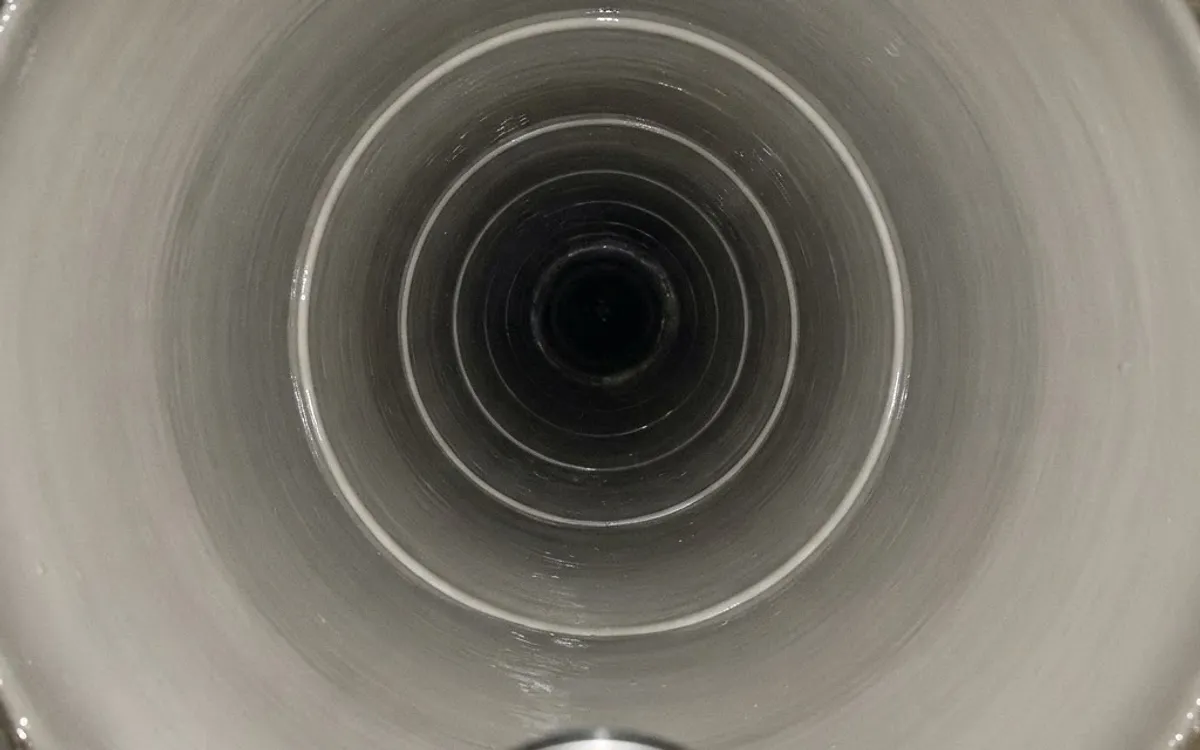
Trenchless pipe relining is the permanent solution for most root-damaged sewers. After the roots are cut and the pipe is jetted clean, a seamless liner saturated with composite resin technology is pulled or inverted into the old pipe, inflated against the wall and cured in place.
The result is a new pipe inside the old one, with no joints and no cracks for roots to enter, rated for around fifty years. It is done through the existing access points, usually in a day, without digging up the driveway or the garden, and it only needs to cover the damaged section, not the whole line.
Excavation and replacement
Where a section has collapsed or the fall of the pipe is wrong, that section is dug up and replaced with new PVC pipe. It is the right fix for a broken pipe that a liner cannot follow, and it is usually a few metres, not the entire pipe.
Root barriers
For a new tree, or a garden being redone, installing a root barrier between the tree and the sewer line redirects root growth downwards and away from the pipes. Barriers help with planting trees near existing pipes; they do little for a large tree whose roots are already in the line.
Preventing tree root problems in the first place
- Plant new trees at least three metres from any sewer or stormwater drain, further for figs, liquidambars and gums, and choose species with less aggressive roots close to the house.
- Find out where your sewer runs. The sewerage service diagram from Sydney Water shows the line; keep large trees and new garden beds off it.
- If the house is pre-1980s on clay pipes under existing trees, book a jet clean and camera check every couple of years. Catching root growth early is a short reline; catching it late is a collapsed pipe.
- Do not rely on catching debris with strainers to stop roots; strainers stop what goes down, not what grows in. Roots in sewer lines are a pipe problem, not a habit problem, and they affect the whole drainage system downstream of the entry point.
- When a plumber clears roots, insist on seeing the camera footage before agreeing to any repair, and before accepting that the drain will be fine.
What it costs
Clearing tree roots in sewer lines in Sydney sits in our published range of $450 to $850 for a sewer main, including jetting with a root cutter and the camera inspection. Root removal on a badly infested line can push that towards the top of the range.
Relining the section where the roots came in is a setup cost of about $2,500 plus $450 to $650 a metre, and most root entries need one to three metres. Excavating and replacing a collapsed section is roughly $1,500 to $5,000. We show you the footage and the range; the decision is yours.