- 1What relining is
- 2What replacement is
- 3When relining wins
- 4When replacement wins
- 5The cost picture
- 6The honest version
- 7Pipe relining vs replacement: the key differences
- 8How pipe relining works
- 9How pipe replacement works
- 10When relining is the better option
- 11When replacement is the only option
- 12Relining vs pipe replacement: cost
- 13What we recommend, and why
What relining is
Relining inserts a flexible liner soaked in resin into the old pipe, then cures it hard — creating a new, seamless, root-proof pipe inside the old one. No digging, no disruption to driveways or gardens, and usually done in a day.
What replacement is
Replacement means digging up and removing the old pipe and laying a new one. It’s more disruptive and often more expensive, but it’s the right answer when a pipe is fully collapsed or badly misshapen — relining needs a pipe that’s still roughly pipe-shaped.

When relining wins
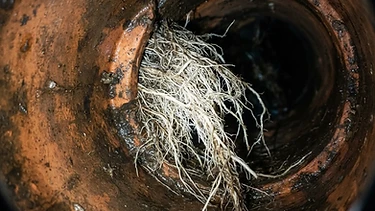
Cracked or root-filled clay with sound shape, joints that have opened, multiple root entry points along a line, and any situation where digging up a driveway, garden or under a house is best avoided. Most recurring root problems in older Sydney homes are relining jobs.
When replacement wins
A fully collapsed section, a pipe that’s badly sagged or holding water along a long stretch, or a line that’s been squashed by something heavy above it. The camera makes this call clear — you can’t reline a pipe that’s lost its shape.
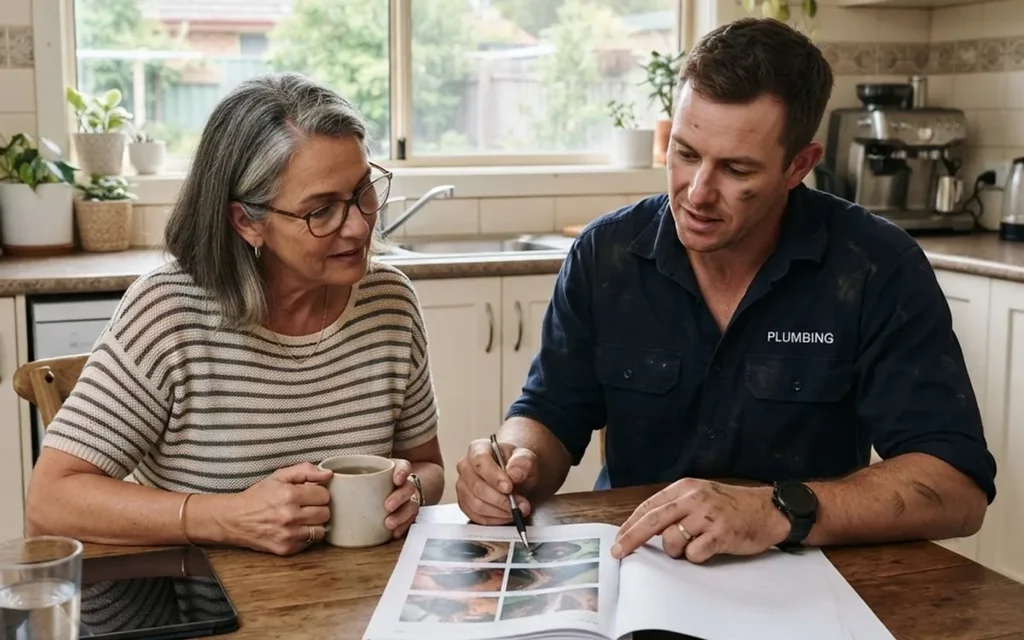
Want to see what’s actually going on?
A plumber answers the phone, 7 days · 6am–10pm. Or book a camera down the line and see the problem for yourself before anyone quotes.
The cost picture
Relining a standard residential section is typically $3,000 to $8,000. A targeted replacement of a short collapsed section can be less; a full-line replacement can be more. The camera tells us which you actually need — and we’ll show you the footage before quoting either.
The honest version
Neither is cheap, but both beat clearing the same drain every few months for the rest of the time you own the home. If you’re spending on repeat call-outs, a one-off fix usually pays for itself within a couple of years.
Pipe relining vs replacement: the key differences
Pipe relining repairs the existing pipe from the inside. Traditional pipe replacement digs it up and installs a new pipe. Both repair damaged pipes; they differ in how much of the yard is disturbed, what they cost, how long they take, and what kinds of damage they can fix.
Relining pipes works when the old pipe still has its shape. Full pipe replacement is the only option when it does not, and in such cases the plumber should say so plainly rather than sell pipe relining services that will fail. Everything else in the decision is about cost, access and what is on top of the pipe.
How pipe relining works
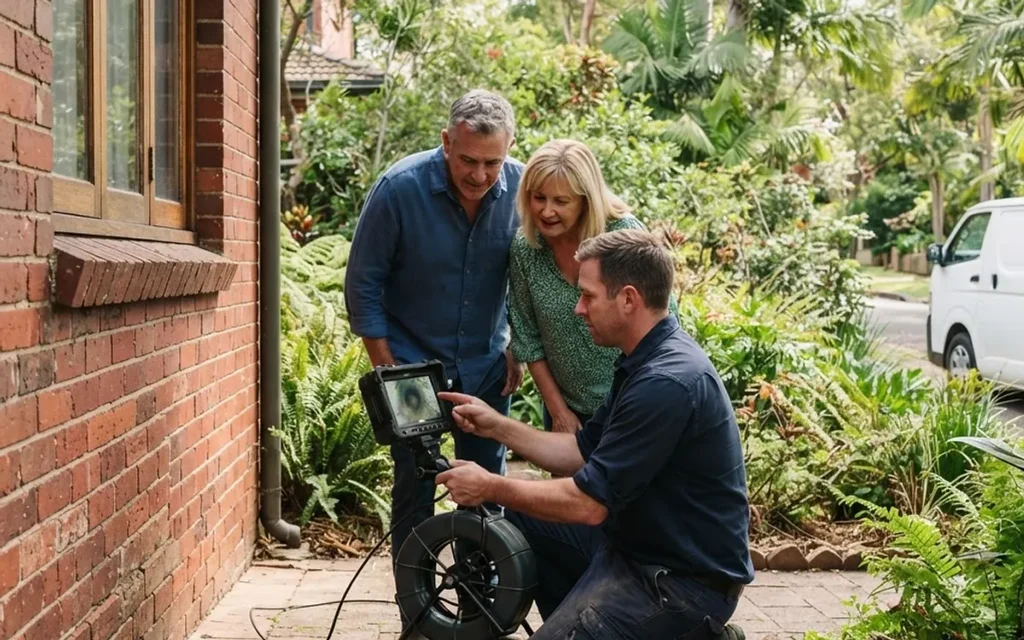
Relining starts with a jet clean and a camera inspection to confirm the pipe is sound and to measure the damaged section. A flexible resin liner is then pulled or inverted into the pipe from an access point. It is inflated against the pipe wall and cured in place with hot water, steam or UV light. No trench.
The cured liner is a smooth, seamless new pipe inside the old one, bonded to it, with no joints for tree roots to enter. Any branch connections are reopened with a robotic cutter. Most residential jobs are finished in a single day, through the existing gully or inspection opening, with no digging. The method works because the specialised equipment does the work from inside the pipe; the only things above ground are the van and the curing unit. Pipe relining offers a lower carbon footprint for the same reason: no machinery, no spoil, no truckloads of waste.
The internal diameter is reduced by a few millimetres, but because the liner is smooth and jointless the flow capacity usually improves compared with a rough, cracked clay pipe. Quality installations of modern relining systems are rated for up to 50 years.
How pipe replacement works
Replacement means excavation. The plumber locates the damaged section from the CCTV footage, digs down to the pipe, cuts out the broken or collapsed length and installs new PVC pipe at the correct fall, then backfills. Under grass it is a day; under a driveway, a path, concrete slabs or a retaining wall it is longer, and the surface has to be cut and reinstated afterwards.
A new pipe lasts decades, and replacement is the method that allows the route or the fall of the drain to be changed, which relining cannot do. The trade-off is disruption: soil displacement, construction waste, landscaping restoration and safety measures around an open trench, all of which are additional costs on top of the plumbing.
When relining is the better option
- Tree root intrusion at joints, with the pipe otherwise intact. Relining seals every joint in the damaged section, which is why it is the standard fix for roots in old clay.
- Cracked or fractured pipe that still holds its shape, including hairline cracks and open joints.
- Pipe under a driveway, a concrete slab, a pool, a garage, established landscaping or a neighbour’s property, where excavation would cost more than the plumbing.
- Long runs where only the joints are failing. Relining a longer section is often cheaper per metre than digging it.
- Old materials such as clay, terracotta and cast iron, where replacing the whole line would be a major job and only a section is damaged.
- Commercial properties and car parks where a trench would close the business.
When replacement is the only option
- A completely collapsed section, where there is no pipe left for a liner to follow.
- A belly or back-fall, where the pipe sags and holds water. A liner follows the sag; only re-laying the pipe fixes the fall.
- A badly displaced joint, where one section sits well below the next and the camera cannot pass.
- A pipe size that is wrong for the house, or a drainage design problem where the route needs changing.
- Very short damaged sections in soft ground near the surface, where a small dig is quicker and cheaper than setting up relining equipment.
Relining vs pipe replacement: cost
In Sydney, sewer pipe relining is a setup cost of about $2,500 plus $450 to $650 a metre for residential lines, with longer sections often cheaper per metre. Most root-damaged clay sewers need one to three metres relined at the entry point, so a typical relining job lands between $3,000 and $5,000.
Drain replacement by excavation is roughly $1,500 to $5,000 for a short section under grass, and rises sharply under concrete, paving or a driveway once cutting and reinstating the surface is included. Replacing a whole sewer line can run past $10,000. The replacement costs that catch people are the ones outside the plumbing quote: the concreter, the landscaper, the fence.
Both need a CCTV inspection first, and both should come with a written warranty. Neither should be quoted without the footage.
What we recommend, and why
We recommend the method the camera supports, not the one that is easiest to sell. We do not replace pipes that a liner would have fixed. For most older Sydney homes with roots through clay joints, that means relining the damaged section. It is done in a day, it costs less than digging, and it stops the roots for good. For a collapsed or back-falling section it is a targeted dig, because a liner in a collapsed pipe is money wasted.
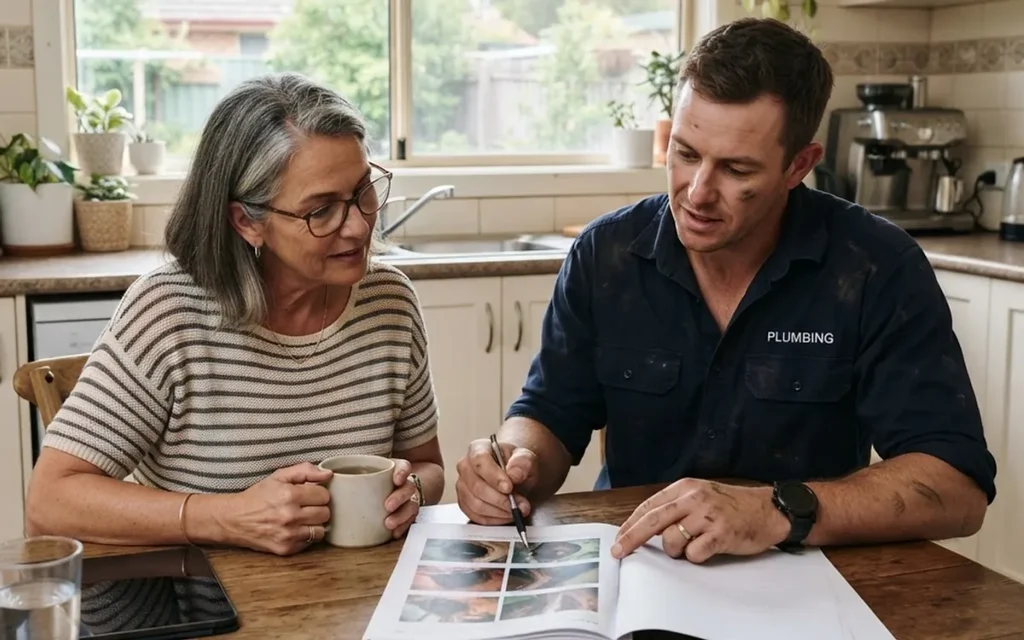
Either way the process is the same: clear the blocked drain, jet the line, run the CCTV camera, show you the footage, give you a price range for the repair, and let you decide. Many homeowners are told they need a full replacement when a two-metre reline would do. The footage is how you tell the difference.